
Amirah Al Wassif: 6 Poems

Remnants of a Woman under Bombardment
The barber asks, “When was the last time you had your hair cut, sir?”
I reply angrily, “I am not your ‘sir.’
I am a woman under bombardment.”
I look into the mirror and find my face split in two halves—
One half, a scene of my childhood doll, shattered by bombs.
The other, me taking a selfie with an ancient olive tree.
The barber asks, “When was the last time you trimmed your mustache, sir?”
I reply angrily, “I am not your ‘sir.’
I am a woman under bombardment, with no luxury for ‘beauty salons.’”
In the mirror, I see an olive tree birthing another from the womb of its imagination,
Gazing at me with profound tenderness.
I smell the scent of fresh bread
And see tiny homes, no larger than a violin,
Embracing one another
Before the deafening explosions tear them apart.
The barber asks me, “When was the last time you laughed, ma’am?”
I fall silent, as if I’ve forgotten how to speak.
I stay silent and remember how my father’s laughter melted the sugar in my blood,
How my mother’s laughter painted suns and moons around my head.
I stay silent and hear the sound of our puppy—
Killed by the bombs of war, deliberately or perhaps by mistake.
The dream of a woman wishing to be a continent
He whispered to me in hieroglyphs and said, “I love you, Cleopatra. Tell me, are you a mermaid?”
I replied, “I’m not Cleopatra. I’m a girl with a forehead made of marble, and a hole in her soul bigger than the ozone layer.”
He laughed and said, “Do you still believe what they say on earth?”
I told him, “I taught you that joke, so now I’m going to stop laughing.”
He raised his hand in the air, transformed into half a god, and said, “I’m still reading the news.”
“Tell me, do you know other mad people like me?”
I looked at him deeply, moved closer until I could touch his golden eyelashes, and replied, “I write my memoirs as a woman. Is there any madness greater than that?”
He mocked, “Are you a feminist?”
I leaned in closer, so close that I saw the window of his secret soul—a narrow cell full of bald women, each sitting on the gallows swing, waiting for their sentence to be carried out.
I stepped back with wide strides, pinched myself to wake up, and flew far away to a tree full of oranges, inhabited by fairies and wishes…
Minutes Before the Gazelle’s Death
Minutes before the gazelle’s death, the lion conducted an interview. She stood at the world’s edge, looking back, her mind racing: kissing her fawn, sprinting through the woods, the touch of a breeze, and the dream. Ah, the dream—to leap toward the furthest silver star, to seize it and send it as a translucent light to her dead kin.
Five minutes before the end, the lion approached, laughing, baring his golden fangs.
He snapped a selfie and asked three questions.
First: “Do you understand my language?” The gazelle stared into the void, her eyes vacant.
He drew closer and asked the second: “Are you female?”
Four minutes before the end, the lion posed his last question: “Do you believe in God?”
With two minutes left, the lion opened his maw wide, laughing. “Don’t worry,” he said, “I’m a vegetarian.”
A second after the gazelle died, a witness swore she had felt reassured, having turned her back on the lion.
The Double
My double sits before me now. I stare deep into her, as I do every day after midnight. When I raise my hands, she raises hers. When I wink with my right eye, she winks back. My childish braid sticks its tongue out at us both.
“Good evening, my double,” I say. “Hello,” she says. “How are things? Anything new?”
I consider the question, exactly as I do every day. Anything new?
The sun rises daily. The moon follows us everywhere. Flowers open and close, yet people still pluck them for others with broken hearts. I still count to a hundred before opening any message. The plagues are here. The jealous neighbor is here. The traumas remain.
We still let the large moths sleep among the clothes in the closet, hoping they are the souls of our dead. We still go shopping, read motivational stories, and ruin the environment while holding conferences on how to fix it. Living on Earth, we book digital outfits.
My double is like a photo negative. Her dreams have a voice; her imagination is larger than the galaxy. Yet, she asks: “Anything new?”
I narrow my eyes slyly—the philosopher. I hug myself to reassure us both. The Earth is still here. Yesterday’s breath is still on the pillow. My aunt is still fighting with her husband. New Year’s Eve repeats.
Where Do the Dead Go?
Once, I saw a dead man telling jokes. His tongue was blue from death, and his head was wrapped in cloth. I stared at him to be sure, and there he was, still cracking jokes. I didn’t know whether to laugh or cry. Should I play along? Should I show him sympathy? After all, he was already dead, but maybe he didn’t know that, and I didn’t want to startle him. Maybe no one told him he was dead. Maybe he died when the world ended or exploded. He was still moving his cold, purple lips, telling jokes. He stared straight ahead as if he couldn’t see me—almost like he was speaking to someone invisible. Maybe he was talking to God? Maybe he was hallucinating? Maybe he was creating?
I don’t know what happened, but I was determined to stand before him. I wanted him to look me in the eye. I wanted him to see me the way I saw him. I wanted to know from him why I could see him, even though I was alive. I heard the answer in my ear, and then I began to laugh.
What It Means to Be Afraid
My tribe gathers around a teenage girl, her eyes blindfolded.
Her hands reach out, as though seeking a hand to shake.
The light of twilight disguises itself as a muffled scream.
One among them remarks,
“This is how funerals should be—
No voice, no dreams, no breath. Only the sound of a distant whistle in the ears.”
A small rat gnaws at a withered fruit that has fallen from the tree of a widow,
eighty years old, who lives in the neighborhood.
A lump rises in the throat of the murdered girl’s mother,
as crows eavesdrop on her words.
Her voice echoes in the distance:
“They killed her! They killed her!”
A drop of blood traces a path, forming a circle around the girl’s head—
the girl who embraces death like a flower.
She appears beautiful, almost surreal.
What if she had known she would remain this way—blindfolded, head shaved?
Her mother sighs, as though she has lost the ability to speak.
This happens each time the masked figures forbid singing,
each time someone dares to say “no,”
each time a girl dares to remove her hijab.
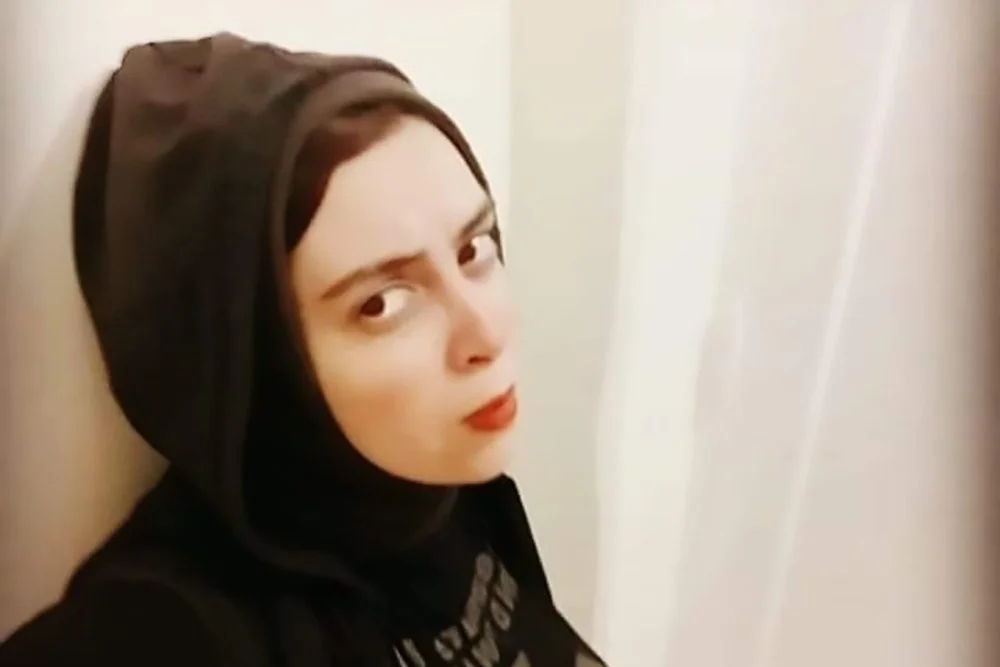
Amirah Al Wassif is an award-winning poet and author. Her poetry collection, For Those Who Don’t Know Chocolate, was published in February 2019 by Poetic Justice Books & Arts, followed by her illustrated children’s book, The Cocoa Boy and Other Stories, in February 2020. Bedazzled Ink Publishing Company released her collection, How to Bury a Curious Girl, in 2022. Most recently, her latest collection, The Rules of Blind Obedience, was published in December 2024. Her work has appeared in numerous print and online publications, including South Florida Poetry, Birmingham Arts Journal, Hawaii Review, The Meniscus, Chiron Review, The Hunger, Writers Resist, Reckoning, and Event Magazine, among others.